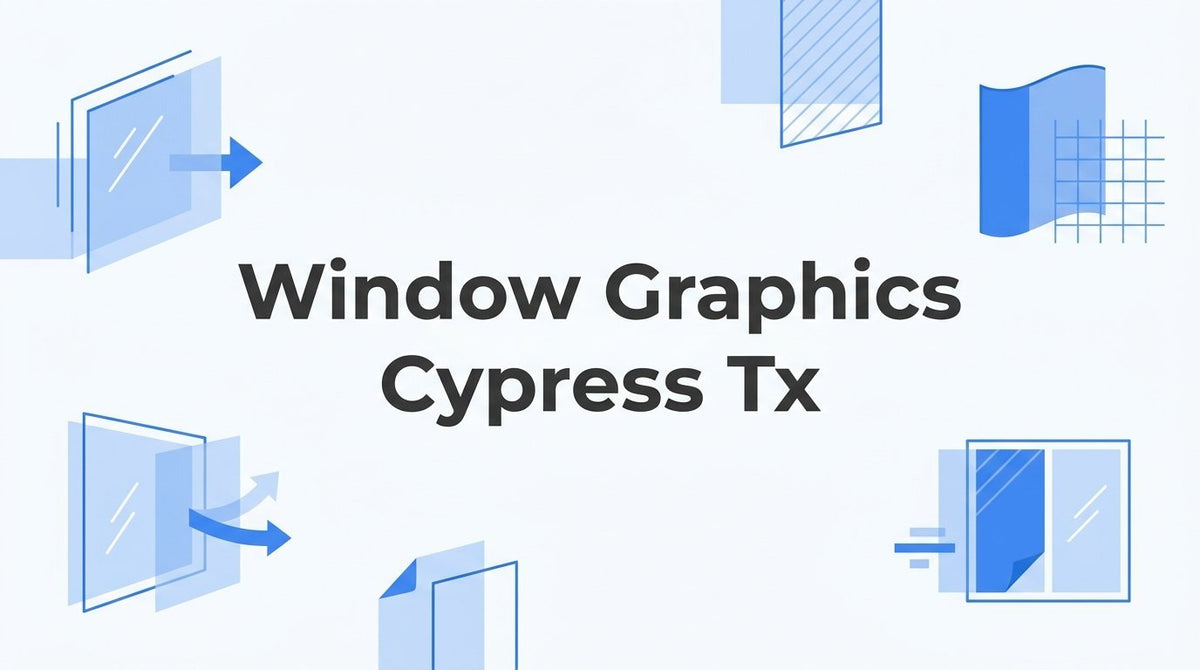
Window Graphics Cypress TX: Types, Materials, and How to Choose the Right Option
Window graphics are printed or cut vinyl, or specialty film, applied to glass to advertise, inform, or add privacy. The right choice depends on three things: what the graphic needs to do, what kind of glass it will sit on, and how long it needs to last. This guide explains the main options for businesses looking into window graphics in Cypress, TX, how they are made and installed, and what to decide before you order.
The Main Types of Window Graphics and What Each Does Best
Most window graphics fall into four families. Each solves a different problem, and many storefronts combine two of them.
Cut vinyl lettering
Cut vinyl is a solid-color sheet cut into letters, numbers, and shapes, with the background weeded away. What remains is the message alone, applied directly to the glass. It is the standard choice for storefront names, hours of operation, suite numbers, and simple logos. The look is clean and sharp because there is no visible film around the artwork.
Printed decals and perforated window film
When you need full color, photography, or gradients, the artwork is printed on vinyl. Printed decals are cut to shape or applied as a rectangle, and they are opaque from the outside.
Perforated window film is printed vinyl with a pattern of tiny holes. From outside, you see the image. From inside, the holes let people look out through it, with some dimming of the view. This makes it a strong fit for storefronts, large display windows, and vehicle-style coverage where you want a big visual without sealing off the glass. It works best in daylight conditions where the outside is brighter than the inside; at night, with interior lights on, the image can become see-through from outside.
Frosted or etched-look film
Frosted film mimics sandblasted or acid-etched glass. It softens the view and adds privacy to offices, conference rooms, clinics, and restrooms while still letting light through. It can be solid, or cut with patterns, logos, or clear bands so people see a person standing behind the glass.
Static clings versus adhesive vinyl
A static cling holds to glass without adhesive, so it peels off and repositions easily. That suits seasonal promotions, sales, and short-term messages you will change often. Adhesive vinyl bonds to the glass and is meant for longer-term use. If the message will stay for months or years, permanent window decals are the more reliable choice; if you swap messages monthly, clings save labor.
Inside vs. Outside Mount: Matching the Graphic to Your Glass
Where the graphic sits on the glass changes the material you need, how long it lasts, and even how the artwork is prepared.
First-surface graphics are applied to the outside of the window. They read normally and look crisp, but they take the full exposure of sun, rain, dust, and cleaning. That calls for outdoor-rated vinyl, and usually a protective laminate on printed pieces.
Second-surface graphics are applied to the inside of the glass and viewed through it. The artwork is printed in reverse so it reads correctly from outside. The glass shields the graphic from weather and scrapes, which helps it last, and it keeps vandalism and window-washing damage away. The trade-off is a slightly different look, since you view the print through the glass, and the order of printed layers must be planned for that.
Check your glass first
Not every window treats film the same way. Tinted glass, low-E coated glass, and double-pane insulated units can absorb heat, and added film can raise the temperature across the pane. In some cases that stress can matter. Before you order, confirm adhesive and film suitability with your production team, and with the glass manufacturer or building owner when you can. If you know the window brand or type, share it when you request a quote.
Leases, landlords, and local rules
If you lease your space, read the lease and ask the landlord about window signage. Shopping centers and office parks often set limits on size, coverage, or color. City, county, and HOA sign rules may also apply. Verify the current requirements for your address in Cypress and Harris County rather than assuming, since rules can change and differ by location. Our guide to storefront signs in Cypress, TX covers types, materials, and rules in more detail.
Materials and Durability in the Texas Climate
Houston-area sun and heat are tough on adhesives and inks. Material choice matters more here than in milder climates.
Cast vs. calendared vinyl
Both are common, and the difference comes from how the film is made. Calendared vinyl is rolled and stretched into sheets. It costs less, and it suits flat surfaces and shorter-term use. Cast vinyl is poured as a liquid and cured into a thin film. It generally conforms better to curves and lasts longer, which is why it is often chosen for long-term or demanding applications. Lifespan varies by product and exposure, so rely on the manufacturer's rating for the specific film rather than a general number, and ask which one is quoted. You can browse our vinyl graphics collection to see the range of options.
Sun, heat, and exposure
UV light fades inks, and high summer temperatures stress adhesive. A laminate is a clear protective layer applied over printed vinyl. A UV-resistant laminate slows fading and protects against scratches and cleaning chemicals. Exposure matters too: south and west-facing windows in the Cypress, Katy, and Tomball area take the harshest afternoon sun, so those windows benefit most from premium materials. An east-facing window or an inside-mounted graphic will usually be gentler on the material.
One common misconception is that any vinyl will last for years outdoors. It will not. Outdoor-rated, properly laminated material is what makes the difference, and even then expectations should follow the manufacturer's rating.
Removal and residue
Quality adhesives are designed to come off cleanly, and window graphics do not damage glass when matched to it and removed properly. Still, vinyl that has baked in the sun for a long time can turn brittle and leave adhesive residue or come off in pieces. If your graphic has a planned end date, such as a lease term or a campaign, plan removal before the material is far past its rated life. It is easier and cleaner. For related tips, see our walkthrough on how to install and remove decals.
Designing Window Graphics That People Actually Read
Window graphics are usually read quickly, from a distance, and often from a moving car. Design for that glance.
- Contrast and size: use high-contrast colors, large type, and as few words as possible. Thin script fonts and light colors disappear on glass.
- Test against the real background: what is behind the window changes everything. Bright shelves, dark interiors, and reflections shift between day and night, so check the design in both conditions.
- Plan for see-through glass: glass is transparent, so the artwork is seen from both sides. A white ink layer or backing makes colors stand out and look opaque. Without it, colors can look washed out. Light-colored backgrounds, solid fills, or reverse-printed second-surface artwork all change how the piece looks from inside and outside.
Keep to the essentials
A window that tries to say everything says nothing. For most businesses, four items are enough: the business name, one clear offer or service line, hours, and a phone number or web address. Everything else belongs on your website or inside the shop.
Artwork files
Supply your logo as a vector file (such as an AI, EPS, or vector PDF) so it can be scaled to large sizes and cut cleanly. A low-resolution image pulled from a website will look soft and blurry at window scale. If you do not have vector artwork, JYS design services can build or adjust it to match your exact window measurements, including layouts that work around mullions, door handles, and frames.
From Measurement to Installation: What the Process Looks Like
Getting the process right up front prevents most reorders and fit problems. A typical project runs through these steps.
- Measure the glass. Measure the visible glass area, not the frame. Measuring the frame is a common mistake and leads to graphics that are too large. Note mullions, door handles, hinges, push bars, and any obstructions, and take photos of each window.
- Approve the proof. A proof shows the artwork at scale on a mockup of your window. Check spelling, phone numbers, placement, and colors, then approve it before production begins.
- Production and installation. The graphic is printed or cut, laminated if needed, and prepared for application.
Professional install or DIY
Small decals and simple lettering can often be applied by the customer with a squeegee and clear instructions. Large or multi-panel graphics are different. Professional installers use application fluid, squeegees, and precise trimming along the edges to align panels, avoid bubbles and creases, and manage tall or hard-to-reach glass. Our guide to choosing and installing window graphics walks through both approaches. JYS offers local installation across the Cypress and Houston areas. If you are outside that area, we ship nationwide, and local customers can pick up orders directly.
Turnaround
Lead times depend on material, size, design status, and shop schedule. Ask about turnaround when you request your quote, and mention any deadline such as a grand opening, so the timeline is confirmed rather than assumed.
What Affects Window Graphics Cost and How to Get an Accurate Quote
Window graphics pricing does not come down to one number, because the projects vary so widely. These factors drive the cost:
- Total square footage: more glass coverage means more material and more production time.
- Material type: perforated film, frosted film, calendared vinyl, and cast vinyl all differ in cost.
- Color versus single-color: single-color cut vinyl is generally simpler than full-color digital printing.
- Lamination: a protective laminate adds a layer of cost and a layer of durability.
- Design time: new artwork or layout changes take more time than print-ready files.
- Installation complexity: height, multiple panels, hard-to-reach glass, and tight alignment all affect labor.
What to bring to a quote
The more you provide, the more accurate the estimate. Gather these before you reach out:
- Window dimensions, measured at the visible glass
- Photos of each window, including the surrounding frame and any obstructions
- How long the graphic needs to stay up
- Whether you want inside or outside mounting
- Your logo and artwork files, or a description of your idea if you need design help
Because every storefront is different, a custom quote is the reliable way to get a number that matches your project. If you are also weighing other print and signage vendors, our tips on choosing the right sign shop in Cypress, TX can help you compare. You can also explore our full window graphics and decals collection and our custom signs in Cypress, TX page.
Matching Your Goal, Glass, and Timeline
The best window graphic is the one that fits what you need it to do, the glass it will live on, and how long you need it to last. A seasonal sale, a permanent storefront name, and a private conference room each call for a different answer, and the details covered here, from mount side to laminate, are what separate a graphic that looks sharp for years from one that fades early.
If you are in Cypress, Katy, Tomball, or anywhere beyond, send us your window measurements, photos, and ideas, and our team will provide a quote and design help. Experience JYS: Order Now